As a supplier of Table Protection Film, I often encounter various questions from customers. One frequently asked question is whether table protection film attracts dust easily. In this blog, I will delve into this issue from a scientific perspective, considering multiple factors that influence dust attraction and providing practical solutions.
Understanding the Nature of Table Protection Film
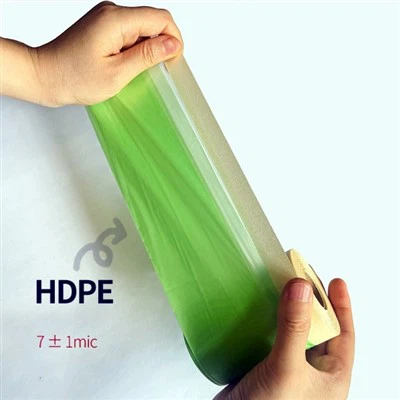
Table protection films come in different materials and types, each with its unique properties. Common materials include polyethylene (PE), polyvinyl chloride (PVC), and polyurethane (PU). These materials are chosen for their protective qualities, such as scratch resistance, moisture resistance, and durability. However, their surface characteristics can also play a role in dust attraction.
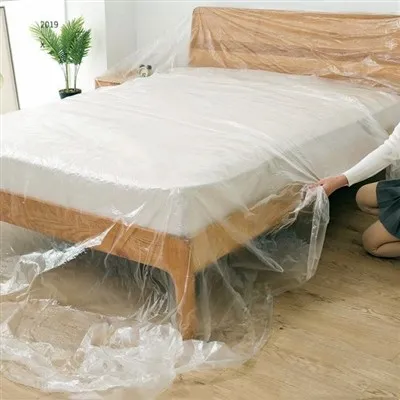
PE plastic is a widely used material for table protection film due to its low cost, flexibility, and good chemical resistance. PE Plastic Furniture Protective Film is known for its smooth surface, which can reduce the adhesion of dust. PVC films, on the other hand, are often more rigid and may have a slightly rougher surface, which could potentially attract more dust. PU films offer excellent abrasion resistance and a high - gloss finish, but their electrostatic properties might also affect dust attraction.
Factors Affecting Dust Attraction
Electrostatic Charge
One of the primary factors that cause a material to attract dust is electrostatic charge. When two materials come into contact and then separate, electrons can be transferred between them, resulting in a static charge. This static charge can attract dust particles, which are usually charged or polarized.
Table protection films can develop static charges during the manufacturing process, installation, or normal use. For example, when the film is unrolled, friction between the layers can generate static electricity. The level of static charge depends on factors such as the material of the film, the humidity of the environment, and the speed at which the film is handled. In dry environments with low humidity, static charges are more likely to build up and attract dust.
Surface Roughness
The roughness of the film's surface also affects dust attraction. A rough surface provides more areas for dust particles to adhere to compared to a smooth surface. Microscopic irregularities on the film's surface can trap dust, making it more difficult to clean. Some table protection films may have a textured surface for added grip or anti - slip properties, but these textures can also increase dust retention.
Environmental Conditions
The environment in which the table protection film is used plays a crucial role in dust attraction. In a dusty environment, such as a construction site or a workshop, the film is more likely to accumulate dust regardless of its properties. Additionally, air circulation and ventilation can affect the amount of dust that settles on the film. Poor ventilation can lead to a higher concentration of dust in the air, increasing the likelihood of dust being attracted to the film.
Scientific Evidence and Research
Several studies have been conducted on the dust - attracting properties of different plastic films. Research has shown that materials with higher surface energy tend to attract more dust. Surface energy is a measure of the energy required to create a new surface area. Materials with high surface energy have a greater tendency to interact with other substances, including dust particles.
For example, PVC films generally have a higher surface energy compared to PE films. This means that PVC films may be more prone to attracting dust. However, the actual dust - attracting ability also depends on the specific formulation of the film and any surface treatments applied.
Solutions to Reduce Dust Attraction
Anti - Static Treatments
One effective way to reduce dust attraction is to apply anti - static treatments to the table protection film. These treatments can neutralize the static charge on the film's surface, preventing dust from being attracted. Anti - static agents can be incorporated into the film during the manufacturing process or applied as a coating after production.
Smooth Surface Design
Opting for a table protection film with a smooth surface can significantly reduce dust accumulation. Smooth surfaces have fewer areas for dust to adhere to, making it easier to clean. When choosing a film, look for products that are specifically designed to have a low - friction, smooth finish.
Regular Cleaning
Regular cleaning is essential to keep the table protection film free of dust. Use a soft, lint - free cloth or a microfiber cloth to wipe the film gently. Avoid using abrasive cleaners or rough materials, as they can scratch the film's surface and increase dust attraction. In some cases, a mild soap solution can be used to clean the film, but it should be rinsed thoroughly to prevent residue buildup.


Our Product Offerings
As a table protection film supplier, we offer a wide range of products to meet different customer needs. Our Protective Painting Films are designed to provide excellent protection during painting projects while minimizing dust attraction. These films are made from high - quality materials with anti - static properties, ensuring a clean and dust - free surface.
Our Kitchen Cabinet Protection Film is another popular product. It is resistant to moisture, stains, and scratches, and its smooth surface reduces the likelihood of dust accumulation. This film is ideal for kitchen cabinets, where a clean and hygienic environment is essential.
Contact Us for Purchase and Consultation
If you are interested in purchasing our table protection films or have any questions about dust attraction or other product - related issues, we are here to help. We have a team of experts who can provide you with detailed information and guidance on choosing the right film for your needs. Whether you are a homeowner, a furniture manufacturer, or a business owner, we can offer customized solutions to suit your specific requirements.
References
- “Surface Energy and Dust Adhesion on Plastic Films,” Journal of Applied Polymer Science.
- “Effect of Environmental Conditions on Dust Accumulation on Protective Films,” Proceedings of the International Conference on Materials Science and Engineering.
- “Anti - Static Technologies for Plastic Films,” Plastic Technology Magazine.