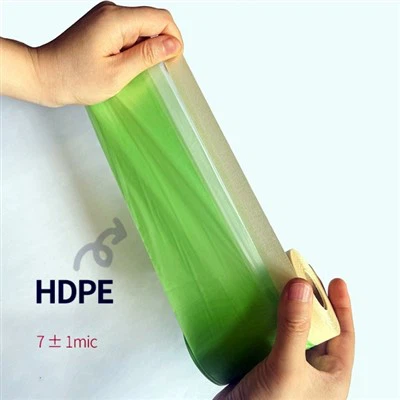
Hey there, car enthusiasts! As a supplier of Car Transparent Film, I often get asked if thicker car transparent film offers better protection. Well, let's dive right into this topic and find out.
First off, let's understand what car transparent film is all about. It's a thin, clear layer that you can apply to your car's exterior. Its main job is to protect the paint from all sorts of nasties like scratches, stone chips, and even UV rays. You know, those little things that can really mess up the look of your ride over time.
Now, when it comes to the thickness of the film, it seems like a no - brainer that thicker might mean better protection, right? Well, to some extent, that's true. Thicker films generally have more material to absorb impacts. For example, if you're driving on a gravel road and a small rock hits your car, a thicker film is more likely to take the hit without letting the rock reach the paint.
Let's talk about the science behind it. The impact resistance of a film is related to its thickness. A thicker film has a greater mass per unit area. When an object hits the film, this extra mass helps to distribute the force of the impact over a larger area. This means that the force applied to any one point on the paint is reduced, reducing the chances of damage.
But it's not all about just slapping on the thickest film you can find. There are some downsides to using a very thick car transparent film. One of the biggest issues is the application process. Thicker films can be a lot more difficult to install. They're less flexible, which makes it harder to conform to the curves and contours of your car. You might end up with bubbles or wrinkles, which not only look bad but can also reduce the film's effectiveness.
Another thing to consider is the cost. Thicker films usually cost more. This is because they use more raw materials and often require more advanced manufacturing processes. So, if you're on a tight budget, you might have to think twice before going for the thickest option.
Let's also look at the long - term performance. Some thicker films might not age as well as thinner ones. Over time, they can become more prone to yellowing, especially if they're exposed to a lot of sunlight. This can really affect the appearance of your car, which is not what you want when you're trying to protect its looks.
Now, let's compare different thicknesses in real - world scenarios. For daily city driving, a thinner film might be just fine. You're not likely to encounter a lot of high - impact situations like flying rocks on a highway. A thinner film can still protect against minor scratches from things like shopping carts in parking lots or branches brushing against your car.


On the other hand, if you're someone who does a lot of long - distance driving on highways or off - road driving, a thicker film could be a better choice. The increased impact resistance can give you peace of mind knowing that your car's paint is well - protected from the hazards of the road.
As a supplier, I've seen a lot of customers make different choices based on their needs. Some are more concerned about the aesthetics and want a film that's easy to apply and doesn't change the look of their car too much. Others are more focused on maximum protection, even if it means dealing with a more challenging installation process and a higher cost.
If you're in the market for car transparent film, I'd recommend considering your driving habits and budget. Don't just assume that thicker is always better. It's all about finding the right balance for your specific situation.
Now, let's talk about some other related products that might be of interest to you. If you're looking for masking films, we've got some great options. Check out our China Factory Supply Masking Film Rolls. These are perfect for protecting your car during painting or other work. We also have Dust Proof Plastic Masking Film, which can keep your car free from dust and debris. And if you're specifically looking for something to protect white paint, our White Paint Protection Film is a great choice.
If you're interested in learning more about our car transparent film or any of our other products, feel free to reach out. We're here to help you make the best decision for your car. Whether you need advice on choosing the right thickness or want to know more about the installation process, we've got you covered. So, don't hesitate to start a conversation with us and let's work together to keep your car looking its best.
References
- "Automotive Paint Protection Films: A Comprehensive Guide" - Published by an industry research group.
- Various studies on polymer materials and their impact resistance in automotive applications.