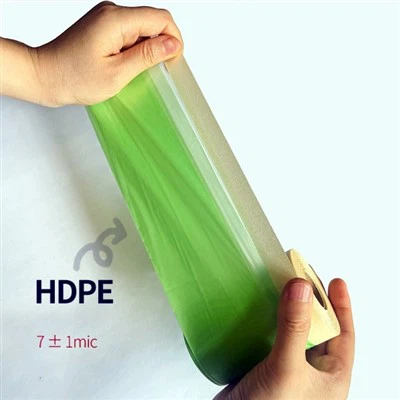
Hey there! As a stretch film supplier, I've gotten a ton of questions about the static electricity property of stretch film. It's a topic that might not seem super exciting at first, but it's actually pretty important, especially when it comes to how well the film works in different situations. So, let's dive right in and explore what static electricity in stretch film is all about.
What is Static Electricity?
First off, let's quickly go over what static electricity is. You know when you walk across a carpet in your socks and then get a little shock when you touch a doorknob? That's static electricity. It's basically an imbalance of electric charges within or on the surface of a material. When two materials come into contact and then separate, electrons can transfer from one to the other. This leaves one material with a positive charge and the other with a negative charge.
In the case of stretch film, static electricity can build up during the manufacturing process, when the film is being unrolled, or when it comes into contact with other surfaces. This can have both positive and negative effects on how the film is used.
Positive Effects of Static Electricity in Stretch Film
One of the good things about static electricity in stretch film is that it can help the film stick to itself. When you're wrapping a pallet or a bundle of items, the static charge can make the film adhere to the layers below it. This is really useful because it helps keep the load secure during transportation. You don't have to worry as much about the film coming loose and the items shifting around.
For example, if you're shipping a bunch of boxes on a pallet, the static electricity in the stretch film will hold the boxes together. It acts like an extra layer of security, reducing the risk of damage during transit. This is why many of our customers love our Premium Stretch Film. It has just the right amount of static charge to provide excellent holding power.
Another positive aspect is that static electricity can help the film conform to the shape of the items being wrapped. It can hug the contours of irregularly shaped objects, providing a tight and secure fit. This is great for products that are odd - shaped or have a lot of curves.
Negative Effects of Static Electricity in Stretch Film
However, static electricity in stretch film isn't all sunshine and rainbows. One of the biggest problems is that it can attract dust and other small particles. If you're wrapping products in a clean environment, like in a food processing facility or an electronics factory, this can be a major issue. The dust and particles can contaminate the products, which is a big no - no.
Static electricity can also cause problems when it comes to unwinding the film. Sometimes, the film can stick to the dispenser or to itself in an unwanted way. This can slow down the wrapping process and make it more difficult to use the film efficiently. You might end up with a jumbled mess of film, which is really frustrating.
In some cases, static electricity can even cause sparks. This is a huge safety concern, especially in environments where there are flammable materials. A spark could potentially ignite a fire or an explosion, which is obviously extremely dangerous.
Controlling Static Electricity in Stretch Film
As a supplier, we're always looking for ways to control the static electricity in our stretch film. There are a few different methods we use. One way is to add anti - static agents to the film during the manufacturing process. These agents help to reduce the build - up of static charge. They work by either conducting the static electricity away from the film or by neutralizing the charges.


Another method is to use a static eliminator during the wrapping process. These are devices that emit ions to neutralize the static charge in the film. They can be really effective, especially in large - scale operations.
We also offer Stretch Film Tapes that have been designed to have a lower static charge. These tapes are great for applications where static electricity is a concern. They still provide good holding power, but without the negative effects of excessive static.
Testing the Static Electricity Property of Stretch Film
We take the static electricity property of our stretch film very seriously. That's why we conduct a lot of tests to make sure our products meet the highest standards. One of the tests we do is the surface resistivity test. This measures how easily an electric current can flow across the surface of the film. A lower surface resistivity means that the film is more conductive and less likely to build up a static charge.
We also do tests to see how much dust the film attracts. We expose the film to a controlled environment with dust particles and then measure how much dust sticks to it. This helps us to determine if the anti - static agents are working effectively.
Choosing the Right Stretch Film Based on Static Electricity Needs
When it comes to choosing the right stretch film for your needs, it's important to consider the static electricity property. If you're wrapping products in a clean environment, you'll want to choose a film with a low static charge. Our anti - static stretch films are perfect for these applications.
On the other hand, if you're just wrapping pallets for general transportation and don't have to worry about dust or sparks, a film with a normal amount of static charge might be sufficient. It will provide good holding power and help keep your load secure.
Conclusion
So, there you have it! The static electricity property of stretch film is a complex but important topic. It can have both positive and negative effects on how the film is used. As a stretch film supplier, we're committed to providing our customers with high - quality products that have the right amount of static charge for their specific needs.
If you're interested in learning more about our stretch films or have any questions about static electricity, don't hesitate to reach out. We're always happy to help you find the perfect solution for your wrapping needs. Whether you need a film with low static for a clean environment or a film with good holding power for general shipping, we've got you covered. Let's have a chat and see how we can work together to meet your requirements.
References
- "Plastics Packaging: Properties, Processing, Applications, and Regulations" by Wilmer A. Jenkins and James P. Harrington
- "Handbook of Polymer Science and Technology" edited by Herman F. Mark, James E. Mark, and Robert A. Meyers