Hey there! As a table protection film supplier, I've been getting tons of questions lately about whether table protection film affects the table's heat - dissipation ability. So, I thought I'd sit down and write this blog to clear things up for all you folks out there.
Let's first talk about why heat dissipation matters for tables. Some tables, especially those used with electronic devices like laptops or those near heat - generating appliances, need to dissipate heat effectively. If heat builds up on the table surface, it can not only damage the table material over time but also potentially affect the performance of the devices placed on it. For example, a laptop can overheat if the table it's on can't get rid of the heat properly.
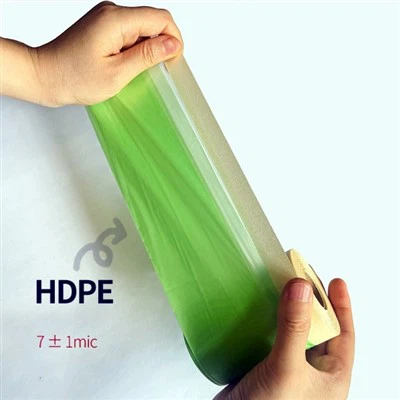
Now, let's dig into how table protection film might play a role in this. The key factor here is the material of the protection film. Most of the table protection films we supply are made from high - quality plastics like polyethylene or polypropylene. These materials are known for being lightweight, flexible, and having good durability.
Polyethylene, for instance, is a common choice. It has a relatively low thermal conductivity. Thermal conductivity is a measure of how well a material can transfer heat. A low thermal conductivity means that it doesn't conduct heat as easily as some other materials. So, in theory, when you put a polyethylene table protection film on your table, it might act as a bit of a barrier to heat transfer.
But here's the thing. The thickness of the table protection film also matters a great deal. Our Clear Protective Film for Tables is usually very thin, often less than 0.1 millimeters. At such a small thickness, the impact on heat dissipation is actually quite minimal.
Think about it like this. If you have a hot cup of coffee on a table covered with our thin protection film, the heat from the cup will still be able to transfer through the film and into the table. The film isn't thick enough to completely block the heat flow.
Another aspect to consider is the type of table. Different table materials have different heat - dissipation properties. For example, a wooden table has a different way of handling heat compared to a marble table. Marble is a good conductor of heat, so it can spread the heat out more quickly. Our Protective Film for Marble Table is designed to work well with marble's natural heat - dissipation abilities. Even with the film on, the marble can still do a decent job of getting rid of heat.
On the other hand, a wooden table might not be as efficient at heat dissipation. But again, our thin protection film won't make a huge difference. Wood is a porous material, and heat can still move through it and the film to some extent.
We've also done some tests in our lab to see how our films affect heat dissipation. We placed a heat source on tables with and without our protection film and measured the temperature over time. The results showed that for normal household use, the difference in temperature was negligible. This means that for most people using our table protection films, they don't have to worry about their tables losing their heat - dissipation ability.
Now, if you're using a table in an industrial setting where there's a lot of heat generation, like near a large - scale electrical equipment, you might want to be a bit more cautious. In such cases, we recommend using our Factory supply Furniture Protective Film 55cm which is engineered to have slightly better heat - resistant properties. But even then, as long as you're using it properly, the impact on heat dissipation is still manageable.
In conclusion, for the average consumer using our table protection films in a home or office environment, the effect on the table's heat - dissipation ability is almost non - existent. The benefits of using our protection films, such as protecting the table from scratches, stains, and UV damage, far outweigh any minor impact on heat transfer.
If you're interested in our table protection films and want to learn more or place an order, don't hesitate to reach out. We're always happy to have a chat about your specific needs and help you find the right film for your table. Whether it's for a small coffee table in your living room or a large conference table in your office, we've got you covered.


References
- Textbooks on materials science discussing the thermal properties of plastics.
- Internal lab test reports on the heat - dissipation of tables with and without protection films.